


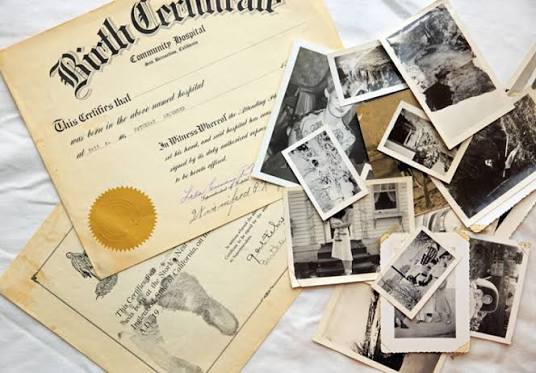
Vital records are printed or electronic forms of essential records kept under the government’s authority. They are records of significant life events and include birth certificates, marriage certificates, adoption papers, separation agreements, divorce certificates, death certificates, and more.
These records are registered locally in state departments, and their analysis is the basis behind vital statistics. National and state departments can use vital statistics to keep track of changes in the different sectors of the nation. The Center for Disease Control (CDC) and National Center for Health Statistics (NCHS) use vital health numbers to keep track of significant trends in healthcare. This data is necessary to effectively distribute health services and design and implement public health measures nationwide.
In the United States, there are 57 vital registration jurisdictions, 50 of which are states. For Hawaii, the Office of Health Status and Monitoring, a unit under the State Department of Health, is responsible for the civil registration of vital records. The unit can provide only records dated from July 1909.
What are Birth Certificates in Hawaii?
Birth certificates are official documents containing a person’s birth records, including pertinent data such as their name, gender, parentage, and more. In Hawaii, they are confidential for the first 75 years, after which they become accessible public information.
You can order a certified birth certificate in Hawaii online or through mail. In-person requests have been suspended indefinitely due to COVID-19 restrictions. You can make a request if:
a) You have a government-issued photo ID.
b) You have made the necessary payment.
c) You can establish a genuine and direct interest in the record.
Requestors have to ensure that they are eligible to receive the certificate before making an order.
One copy of a certified birth certificate costs $10 plus a general administration fee of $2.50. If you want more than one copy, each additional copy will incur an extra fee of $4. If you need more than five copies, you will have to pay a general administration fee of $2.50 for each increment of five copies. For instance, if you order six to ten copies of the certificate, you will spend $5 in general administration fees ($2.50 for the first five and $2.50 for the rest)
Payments can be made online or through mail-in.
For online payments
● Complete the order form. You can make an order as a guest or with a free eHawaii account. The significant advantage of requesting a document with an account is that you can track your order. This will be very helpful if you live on a different island.
● Some information that you’ll be required to fill in are the requestor’s name, address, country, zip code, return address, and more. Ensure you input the correct information to avoid delays.
● Have your government-issued ID in a format ready for upload.
● Make the payment with a debit or credit card. The name on the card must match the requestor's name for the vital record.
For mail-in payments
● Download a copy of the order application form.
● Make your payment with cashier’s checks, certified checks, or money orders payable to the State Department of Health. Cash, business, or personal checks are not accepted. Make sure you pay the exact amount; else, the department may return your money.
● Mail the completed form, along with the checks and a copy of your government-issued ID, to the office address below:
State Department of Health
Office of Health Status Monitoring
Issuance/Vital Statistics Section
P.O. Box 3378
Honolulu, HI 96801
Order processing usually takes from 6-8 weeks, and the printed copies are delivered via first-class postal mail to the mailing address provided by you.
In the case of fetal death, a fetal death certificate is filed by the mortuary responsible for disposing of the body and is available on request to the parents. Birth certificates are not given to parents of stillborn children, although a bill to make a stillbirth certificate available was passed in 2020 to the state legislature.
Other documents related to birth certificates in Hawaii include:
1. Letter of Verification
Instead of certified birth certificates, you can request a verification letter to confirm that the state has a specific birth record. This document does not serve as a substitute for a birth certificate.
2. Late Birth Certificates
People born when Hawaii was still a US territory received a “Certificate of Hawaiian Birth.” The government terminated this certificate in 1972 after Hawaii was made a state and started issuing standard birth certificates.
These certificates are still valid and certified copies can still be ordered from the Department of Health. However, suppose a request is made to amend or change an entry on an existing Certificate of Hawaiian Birth. In that case, the department treats it as a late application for a standard birth certificate. A document known as a “Late Birth Certificate” is issued to the person, and no filing fee is charged.
3. Amendments
To make a change to an existing birth certificate, you have to file for an amendment. There are specific requirements for a person to be eligible for a certificate of birth amendment, such as adoption, gender change, and more.
4. Voluntary Establishment of Paternity (VEP) forms
Unmarried couples with children can request this form to ensure that their children enjoy all the rights and benefits that children with married parents enjoy.
5. Apostille
This document is necessary, especially for international adoptions. An apostille is issued when vital records such as birth or marriage certificates are being transferred between countries that are a party to the Hague Apostille Convention. Apostilles certify that, although foreign authorities issue the documents, they are still authentic and valid in the US.
If the documents are being transferred from a country that isn’t a party to the Hague Convention, the authentication process would require two forms- a certification form and an authentication form.
Apostille requests to the Hawaii Department of Health are made strictly via mail-in, and specific steps need to be followed to get one.
What is a Hawaii Marriage Record?
Marriage licenses are documents that serve as proof of marriage in Hawaii. They offer insight into marriages that occur in the state. In Hawaii, a marriage license is issued before a couple can marry legally. Prospective couples are required to meet a marriage license agent after filling out the marriage license application form. The payment for the license can be given to the agent or, better yet, paid online with a credit or debit card. After the agent issues a marriage license, it is valid for thirty days, after which it becomes invalid, and the couple has to apply for a new one to get married.
Marriage certificates in Hawaii are documents that indicate that a legal marriage has been performed. A certified copy of this document is typically mailed to the couple three weeks after the wedding, although it could take longer. If the certificate is required quickly, the marriage agent can request an expedited one that costs a standard fee of $10.
Marriage certificates are not public records for the first 75 years after their issuance. Requests surrounding marriage certificates, such as amendments, letters of verification, and more, follow the same procedures as birth certificates.
What are Hawaii Death Certificates?
Death certificates are government-issued documents that contain the time, place, and cause of a person's death. In Hawaii, death certificates are generally ordered through the mortuary handling the care of the body. However, a mail-in request option is available, and walk-ins are prohibited due to the pandemic.
You can request a death certificate if:
a) You have a government-issued photo ID.
b) You have made the necessary payment via a cashier’s check, certified check, or money order payable to the State Department of Health.
c) You can establish an honest and direct interest in the record.
Requestors have to ensure that they are eligible to receive the certificate before making an order. The cost of death certificates is $10 for the first copy and $4 for any additional document.
Death records in Hawaii are confidential until 75 years after their issuance.
Are Divorce Records Public in Hawaii?
Divorce records are considered public court records in Hawaii and can be viewed by anyone. Divorce records are the complete case files containing all the information about a divorce, including divorce decrees, motions, transcripts, reports, and more.
A divorce decree is a document stating the final judgment issued by a family court to finalize a marriage dissolution. In Hawaii, divorce decrees legally end a marriage, and they include the terms of service that the divorced couple agreed on. It is signed by the divorced parties, their attorneys, and the judge who gave the final ruling.
The divorced parties, their spouses, descendants, parents/guardians, and designated attorneys can access a divorce decree.
Divorce certificates are documents that indicate the end of a marriage. There are two types of divorce certificates in Hawaii-
- Certified divorce certificate:
This is printed on security paper and carries an official seal. It is only available to the divorced couple, their attorneys, and immediate family members.
- Plain divorce certificate:
This certificate is printed on copy paper and carries a stamp, not a seal. It contains all the information included in a certified divorce certificate, and it is available to anyone requesting it. However, it is only for informational purposes and is not recognized legally.
You can get access to divorce records in three ways;
- In-person: You can get divorce records from the clerk’s office at the family court where the estranged couple processed the divorce. There are four family court districts in Hawaii- O`ahu, Maui, Hawai`i, or Kaua`i. Their websites contain the address and contact details you’ll need to locate the family court on each island.
You will have to go along with a completed request for access to court records form or purchase of court records form, a government-issued ID, and the fee for the document.
The fees needed to get the documents depend on the number of copies of files you want. You can find out the amount payable from the Hawaii Judiciary Schedule of Fees and Costs.
- Via mail: You can also write a request to the office of the family court clerk. In your mail, you will include a filled request for access to court records form or purchase of court records form, a government-issued ID, and the fee for the document.
You can find some of the information you need to fill these forms at the State Judiciary’s Ho`ohiki portal, where Family Court civil case records can be found.
- Online: Alternately, some divorce records can be viewed online using Ho`ohiki Case Searching. You should know that not all divorce records are found here, and this website does not provide access to the documents themselves, just information. To get physical copies, you have to visit the court in person or mail in your request.
To search for a record online, you would need to have at least one of these three:
● The first and last name of the divorcee, or
● The complete Case ID of the divorce case, or
● The circuit, case type, case number, and the year the divorce case was filed.
To obtain a divorce certificate, you will have to request the family court where the case was processed. You can contact hoohikihelp@courts.hawaii.gov for any assistance.
Do Hawaii Adoptions have Vital Records?
There are vital records related to adoptions in Hawaii. However, access to these adoption records is not equal for all adoptees.
Only parties connected to people who are adopted in Hawaii can request their adoption records. Unrestricted access to all vital records is given to the adult adoptee, the adoptive parents, and the birth parents as long as they did the adoption in Hawaii.
If the adoption happened outside Hawaii, the court seals the person’s birth records, and parties do not have access to it. The adoptee does not have an adoption case in Hawaii’s family court system; therefore, they have no case file in Hawaii.
Even if the adoptee was born in Hawaii, there is restricted access to their birth and health records if the adoption proceedings were not carried out in the state.
How to Search Hawaii Vital Records
Most vital records in Hawaii are confidential until after 75 years; therefore, it is impossible to access them freely online. You can get them from:
1. The Office of Health Status Monitoring
This is the unit of the Department of Health that is concerned with the registration of vital records. You can obtain marriage, birth, and death records from their vital records office. Business days are Monday through Friday, from 7:45 am to 2:30 pm, although walk-ins have been temporarily suspended due to COVID.
Their website contains all the necessary guidelines and requirements to make your order. You can easily track your mail order or contact the necessary authorities for any inquiries you might have.
For people living on neighbor islands, you can contact your local District Health Office for assistance:
● Hawaii Island: http://health.hawaii.gov/big-island/home/vital-statistics/
● Maui County (Maui, Lanai, Molokai): http://health.hawaii.gov/maui/vital-statistics/
● Kauai: (808) 241-3498
2. Family Courts
Divorce and adoption records are available in the county or family court where the case was processed. You can also search for some divorce records at the Ho`ohiki portal.
3. Hawaii State Archives and Public Library
If you are searching for birth or marriage records before 1909, these locations have indexes containing birth records from as far back as the 1850s.
4. Third-party websites
Websites like Infotracer contain vital public records like divorce records. You need to have the name, last name, and city or island of residence to do this search.
To successfully obtain vital records with ease, you have to make sure you are eligible to access the document and that you are searching in the right place.