


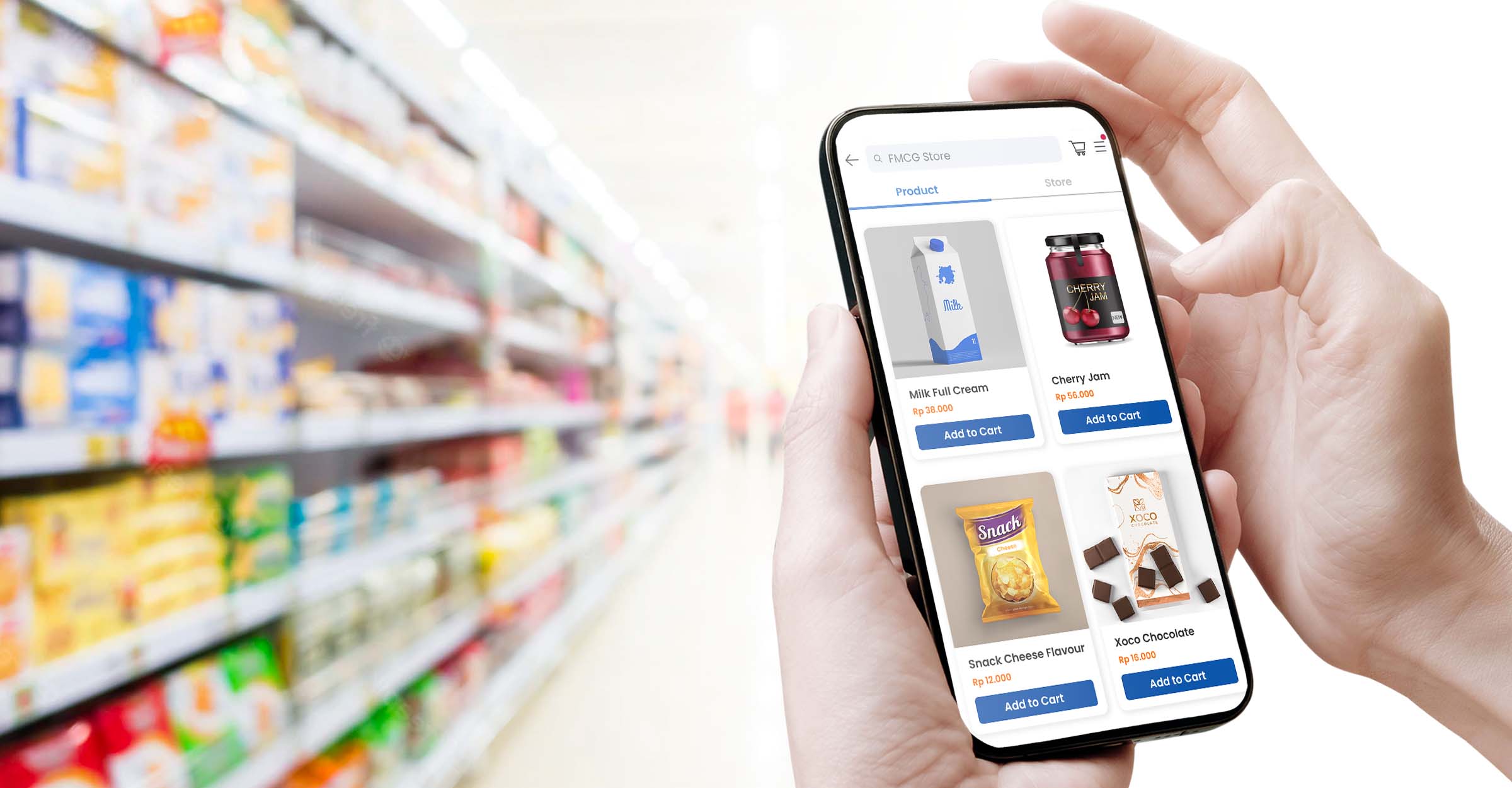
Managing a fast-moving consumer goods (FMCG) business can be challenging, especially with the advent of the pandemic. A plethora of hurdles such as short product cycles and complex sales processes are a major cause of concern in this industry.
To keep up, most B2B players are resorting to FMCG B2B Marketplaces. These platforms enable bulk buyers and sellers to conduct business on a single platform online. They are an effective solution in boosting brand outreach and improving the sales funnel efficiency. At the same time, they also give buyers great variety, which consequently leads to lower prices.
Why choose a Platform for Your FMCG B2B Marketplace?
Choosing your FMCG B2B marketplace is of paramount importance. Here is why you need to ensure that you pick the right one for your business,
1. Change in purchase patterns:
With the onset of the pandemic, consumers had no choice but to focus on home-cooked meals and reduce overall outdoors purchase. To put this into perspective, in 2018, the growth of online FMCG sales was only a measly 20%. However, in 2019, post the pandemic, FMCG online sales grew seven times more.
In May of 2020, the UK had a 75% increase in grocery sales through digital channels. The FMCG sector, which was initially somewhat laid-back about the move to online commerce, found itself rushing for digital shelf space.
To stay relevant while consumers shift from offline to online, you need to follow suit and innovate your sales best practices. It’s critical that your business can meet the new demands of your consumers. A dedicated FMCG B2B marketplace can go a long way in simplifying this process.
2. Supply chain problems:
The fluctuations in the supply chain due to lockdowns have made the FMCG market incredibly volatile and increased food prices. In May 2021, food prices were 38.9% higher than they were exactly a year before. With the increasing scarcity of some products, maintaining constant supply at usual prices can be a challenge.
A B2B marketplace can help you provide complete visibility into your inventory to your customers and save them from unpleasant surprises. You’ll be able to let them know what’s in stock before they make an order.
3. The dreaded delivery and logistics issues:
Within a few months, after moving online, you will find out that your clientele has blown from just the people within your city or state to customers from multiple states or even countries. You will have to start running interstate or international deliveries.
To keep up, you will have to be conversant with compliance and transport rules of various locations. And that is before we even get into the other inconsistencies that come with logistics. A Modern B2B platform with 3PL (Third-Party Logistics) integrations can help you manage all these issues on one interface hassle-free.
Key features you should look for in an FMCG B2B Marketplace
Now that you know the importance of FMCG marketplaces it’s time to find the right one. Make sure the platform you choose has the following features:
● Flexibility: Your marketplace requires flexible front-end and back-end connections that allow vendors to manage their accounts easily. With permission to offer personalized pricing, edit product descriptions, etc, vendors can enjoy a great selling experience.
● Seamless integration: Your platform should integrate with other business features and plugins ((eg. ERP, CIM, logistics, etc.) you use. That way, you can handle most business processes from one platform.
● Optimization for all devices: For clients on the go, your B2B eCommerce platform has to be both mobile and desktop friendly.
● Scalability: The platform you choose should be able to expand as your business grows.
● Analytics: Accurate analytics will help you take advantage of the data you obtain from your business and help you keep tabs on your growing business.
Top 5 B2B marketplace platforms in 2021
#1. Oro
This platform serves as an open source marketplace management platform for B2B businesses of any complexity. What makes it stand out from the rest is its unique and pragmatic native capabilities. The platform integrates multiple third-party solutions into an easy-to-scale API.
Furthermore, with a CRM integrated into the platform, you can rest assured consumer satisfaction for your FMCG business is almost guaranteed. It is, without doubt, one of the best B2B platforms for FMCG markets.
Last but not least, Orocommerce also caters to a variety of eCommerce business models such as B2B, B2C, B2X, etc.
#2. Mirakl
Mirakl integrates with front-end solutions like Salesforce, Magento, etc. It does not allow front-end control of the platform, which might affect your flexibility. However, it has pre-built connectors that allow you to personalize your platform as you wish. Also, the platform offers effective analytics tools for adequate monitoring of your business.
#3. Iceberg
This platform primarily focuses on B2B or B2C marketplaces for businesses in the EU. Popularly known as IZBERG, they provide support for an assortment of B2B endeavours including invoicing and payments. Just like Mirakl, you have no control over the front-end section of the site. However, their biggest advantage is that they support both physical and digital services.
#4. AppDirect
This one is most suitable for online products and services, particularly product management and seller onboarding. It provides both front-end and back-end capabilities, unlike its counterparts Miraki and IZBERG. The upside to Appdirect is that it also offers integration via API for other digital solutions and comes with attractive functionality for vendors.
#5. Marketplacer
This platform works for both B2B and B2C models. Marketplacer has an API that integrates Magento, Shopify, and other eCommerce platforms. It is usually considered to be a vendor hub. The platform is known to have modules for a separate front end which allows it to support digital products and event booking services. In addition, the API integrates with Magento, Shopify, WooCommerce, Magento, and other top eCommerce platforms.
Over to you
FMCG businesses need B2B platforms to ensure seamless business continuity, especially since the beginning of the pandemic. With many FMCG players adopting this new trend, your inability to adapt might pose a serious threat to your business.
Don't be caught unawares. Take advantage of the insights provided in this article to choose the right and regret-free platform for your FMCG B2B Marketplace.